
Introduction: How Design Impacts Conversions
You’ve probably landed on a website before and left within seconds, not because the product was bad, but because something just felt off.
Maybe the layout was cluttered, the text was hard to read, or the page took too long to load. That is the quiet but powerful influence of web design in action.
Research shows that visitors form an opinion about a website in as little as 0.05 seconds. In that blink of an eye, your design determines whether someone stays, clicks, or bounces.
This is why businesses that treat design as a core part of their marketing strategy consistently outperform those that do not.
A well-thought-out design does more than make your site look appealing. It shapes how users experience your brand, how much they trust you, and ultimately, whether they take action.
That is where custom website design comes in. It allows you to tailor every visual, layout, and interaction to guide visitors naturally toward conversion.
In this article, we will explore how investing in a custom website design can transform your online performance. You will learn how it helps you build credibility, improve user experience, and turn visitors into loyal customers.
What Is a Custom Website Design?
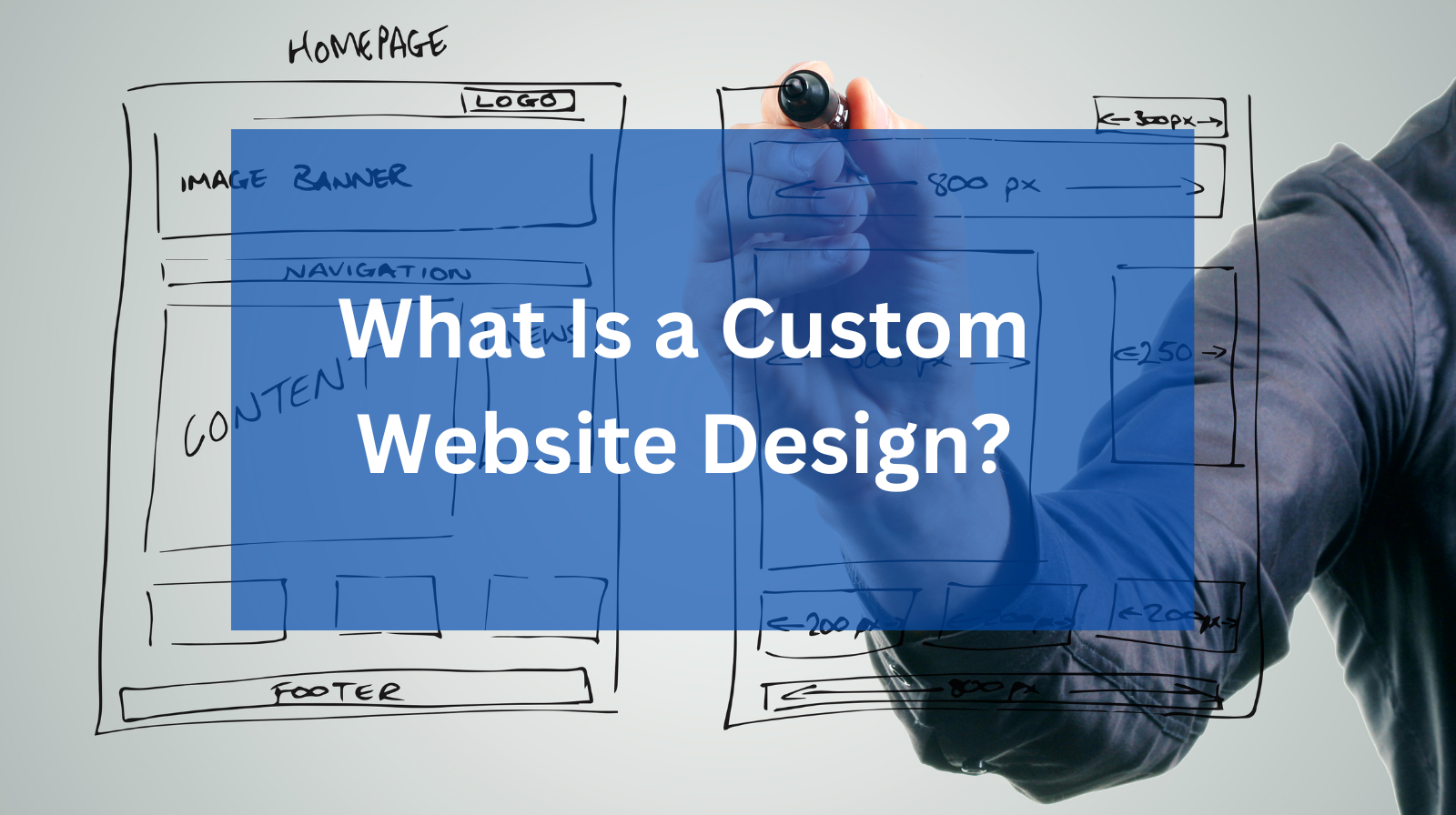
At its core, a custom website design is a digital experience built from the ground up, crafted specifically for your brand, your audience, and your goals.
Unlike pre-made templates that offer a one-size-fits-all layout, a custom site is designed with strategy at its heart.
Every element, from the color palette to the navigation flow, reflects your business identity and supports how you want users to move through your site.
Think of it like tailoring a suit versus buying one off the rack. A template-based design might fit “well enough,” but a custom design is measured to your exact needs. It highlights what makes your business unique, removes friction for users, and maximizes engagement.
Beyond visuals, a custom design also provides structural flexibility. You can build faster-loading pages, integrate SEO best practices from the start, and create unique conversion paths that match your audience’s decision-making process.
Custom Website Design vs. Template: Which Converts Better?
While templates are convenient and affordable, they often come with limitations such as generic layouts, slower loading times, and restricted customization.
A custom website design, on the other hand, is built with performance in mind. It gives you full control over user experience, branding, and scalability, which directly impacts conversions.
In short, if you want your website to not only attract attention but also convert visitors into customers, a custom design gives you the flexibility and precision to make that happen.
Why Design Matters for Conversions
Your website’s design shapes how visitors think and act. A well-designed site builds trust, improves usability, and increases conversions.
Color, layout, and navigation guide decisions. Blue evokes trust, red draws attention, and clean layouts help users focus. Simple, intuitive navigation keeps visitors moving smoothly toward action.
Google reports that a one-second delay in page load time can reduce conversions by up to 20%. Tools like Google Lighthouse help identify and fix performance issues that impact user experience.
A conversion-focused design aligns visuals and messaging to build confidence and reduce friction. Real examples like Basecamp and HubSpot show that cleaner layouts and mobile optimization lead to higher engagement.
Consistent branding, professional imagery, and responsive design strengthen credibility, turning casual visitors into loyal customers.
7 Ways a Custom Website Design Boosts Online Conversions
A custom website design goes beyond aesthetics — it’s a strategic tool that helps businesses convert visitors into loyal customers.
By aligning every visual and functional element with your audience’s expectations, you can create a site that not only attracts attention but also drives measurable results. Here are seven proven ways a custom design can increase your online conversions.
1. Tailored User Experience (UX) that Matches Your Audience
A one-size-fits-all design rarely meets the needs of diverse audiences. Custom website design allows you to create a user experience that reflects your audience’s preferences, behaviors, and expectations.
When your site layout, tone, and navigation align with user intent, visitors are more likely to stay, explore, and take action.
For example, simplifying the checkout process for eCommerce stores or organizing content flow around user goals (like “book a demo” or “get a quote”) can remove friction and improve conversions. Studies show that websites designed around user behavior can increase engagement by up to 200%.
2. Faster Loading Speeds and Better Mobile Optimization
Speed is a major factor in user retention. Google reports that a one-second delay in page load time can reduce conversions by up to 20%. Custom website designs optimize performance by eliminating unnecessary code and focusing on efficiency.
Moreover, with mobile users making up more than half of all web traffic, a responsive, mobile-first design is essential. A custom design ensures your site adapts perfectly to every screen size, delivering consistent functionality and faster load times across all devices.
3. Strategic CTAs and Conversion Paths
In a custom design, every button, banner, and form is placed with purpose. Unlike generic templates, a tailored website lets you experiment with CTA (Call to Action) placement, color contrast, and copy that truly resonates with your target audience.
For instance, bright, action-oriented CTAs like “Start My Free Trial” or “Shop Now” stand out when strategically positioned near value-driven content.
Custom design also allows you to create intuitive conversion paths that guide users from curiosity to commitment without distraction.
4. SEO-Friendly Structure for Better Visibility
A well-structured website is vital for both user experience and search visibility. Custom web designs allow developers to create clean, semantic code that search engines can easily crawl and index.
Elements like schema markup, optimized metadata, and logical site architecture improve ranking potential and make it easier for Google to understand your content. Better visibility means more traffic, and more traffic equals higher conversion opportunities.
5. Enhanced Branding and Credibility
Visitors often judge your brand by the first impression your website gives. A custom design helps you establish a consistent and professional image that builds trust. From unique visuals and typography to tone and messaging, every detail reinforces your brand identity.
Visitors are more likely to engage or purchase when they perceive your site as authentic and reliable. Case studies show that strong branding can increase customer loyalty and conversion rates by up to 33%.
Custom visuals, testimonials, and trust badges also enhance credibility, making visitors feel confident about doing business with you.
6. Scalability and Long-Term Flexibility
Unlike pre-made templates that can limit growth, a custom website is built with scalability in mind. As your business evolves, you can easily integrate new features, redesign landing pages, or add eCommerce capabilities without rebuilding the entire site.
This adaptability ensures your site remains high-performing and conversion-driven even as trends, algorithms, and customer expectations change. A scalable website design is an investment that grows with your business, not against it.
7. Improved Analytics and Conversion Tracking
Data is at the core of continuous optimization. Custom websites are easier to integrate with advanced analytics tools like Google Analytics 4, Hotjar, or CRM systems. This setup provides accurate insights into user behavior, click patterns, and conversion funnels.
With this data, you can run A/B tests, identify friction points, and make informed design changes that directly improve conversions. In essence, a custom design gives you full control over your website’s performance metrics.
How to Make Your Custom Website Conversion-Focused
A visually stunning website alone doesn’t guarantee conversions. To ensure your custom design drives results, it must be strategically planned and data-driven. Here are key steps to make your custom website truly conversion-focused:
-
Research user intent: Understand what your target audience wants to achieve when visiting your site.
-
Plan with wireframes: Map out user journeys and prioritize important elements like CTAs and forms.
-
Focus on responsive design: Make sure every page looks and performs perfectly on all devices.
-
A/B test regularly: Compare different layouts, headlines, and buttons to find what converts best.
-
Collaborate effectively: Designers, SEO experts, and marketers should work together to align visuals with business goals.
The combination of great design, usability, and strategy turns your website into a powerful conversion tool. If you’re ready to upgrade your online performance, work with a web designer who understands conversions and can tailor your website to your audience and goals.